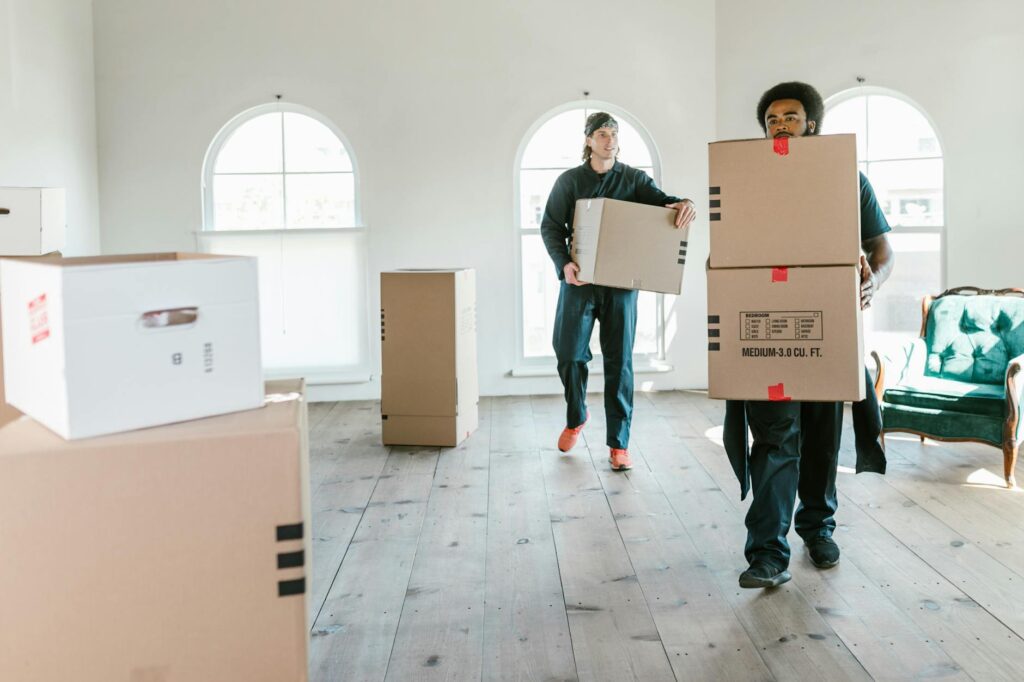
Moving house has a strange way of exposing weak spots in even the best plans.
At first, it looks like a simple sequence of tasks. Pack the boxes, load the van, collect the keys, start again somewhere new. Then real life steps in. A sofa does not fit through the doorway as easily as expected. The last kitchen cupboard contains twice as much as anyone remembered. Parking outside the property suddenly becomes a problem. By midday, the move is no longer just about transport. It has become a test of planning, patience and stamina.
That is why a smooth move rarely depends on one big decision. More often, it comes down to several smaller ones made early enough.
The Best Moves Start Before Moving Day
The first mistake is leaving too much for the final week.
Packing always takes longer than people expect because it is not just physical work. Every drawer creates a decision. Keep it, throw it away, donate it, sell it, pack it now, leave it until later. Multiply that by an entire home and it becomes clear why last-minute packing turns into stress so quickly.
A better approach is to divide the move into phases. Non-essential items can be packed first, then seasonal clothes, books, decorations and stored belongings. Everyday items should stay accessible until the final days. This creates a sense of control and makes it easier to spot problems before they become urgent.
Decluttering also matters more than many people realise. Every unnecessary item has to be packed, carried, transported and unpacked. Reducing volume before the move can save time, lower costs and make the new home feel calmer from the first day.
Local Knowledge Can Save Time and Stress
Every area has its own moving challenges.
In some places, the issue is narrow streets. Elsewhere it is limited parking, older buildings, staircases, access restrictions or seasonal traffic. In counties such as Devon, this becomes especially important. Exeter has busy residential streets and compact central areas, while coastal towns can become far more congested during holiday periods. A move that looks easy on a map may be much more complicated on the ground.
This is where experienced removals teams make a visible difference. Ed Kowalski Removals, based in Exeter and working across Devon as well as on longer-distance moves around the UK, regularly handles these practical challenges. Their work is not limited to simply loading and unloading. It often involves assessing access, planning the order of items, protecting fragile belongings and choosing the right level of support for each move.
That kind of experience helps because moving is rarely identical from one property to another. A small flat, a family house, an office relocation and a move from Devon to another part of the country all require a slightly different plan.
Packing Is More Than Putting Things in Boxes
Good packing is one of the most underestimated parts of moving house.
A box can look full and still be badly packed. If items move inside it, they can break. If the box is too heavy, it becomes difficult to carry safely. If fragile items are wrapped but not supported, they remain vulnerable during transport.
The safest packing has structure. Heavy items should go in smaller boxes. Fragile objects need cushioning and no empty space around them. Electronics should be protected from pressure and vibration. Boxes should be clearly labelled not only by room, but also by priority.
This is especially useful during unloading. Nobody wants to spend the first night searching for chargers, bedding, medication or basic kitchen items. An essentials box should travel separately and contain the things you will need immediately after arrival.
The Real Value of a Smooth Move
A good move is not just quicker. It feels different.
There is less uncertainty, fewer rushed decisions and less physical strain. The day becomes easier to manage because the hardest questions have already been answered. Who is carrying what? Where will the van park? Which items need extra protection? What needs to be unpacked first?
That sense of order matters. Moving house is not only a logistical event. It is also the beginning of a new routine, and arriving exhausted, frustrated and surrounded by chaos is not the ideal start.
The most successful moves are usually the ones treated seriously before the first box leaves the house. With realistic planning, careful packing and the right support where it is needed, moving becomes less of a battle and more of a controlled transition.
And that is the point many people only understand afterwards: a smooth move is not about luck. It is about preparation.