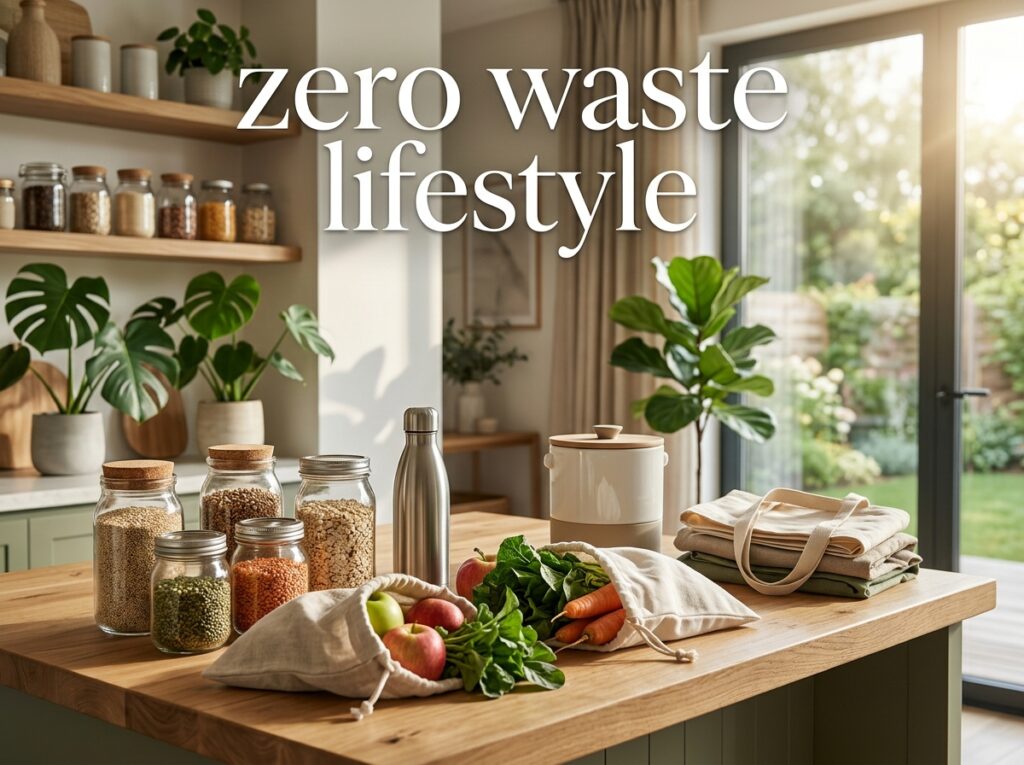
A glass jar filled with lentils sits where disposable packaging once piled up. A worn canvas tote hangs by the door, ready for another grocery run. Vegetable scraps simmer slowly into stock instead of heading toward a trash bin. Nothing dramatic. No grand announcement. Just a series of small decisions repeated often enough to reshape an entire way of living.
The zero waste lifestyle has moved far beyond a niche environmental movement. It now influences consumer behavior, retail strategy, food culture, interior design, fashion, and even hospitality. What began as a practical response to rising waste generation has evolved into a broader philosophy centered on consumption, resourcefulness, and long-term thinking.
At its core, the concept is deceptively simple: send as little as possible to landfills and incinerators. Yet behind that straightforward objective lies a fascinating story involving economics, innovation, personal habits, and changing cultural values.
The Origins of Modern Zero Waste Thinking
Waste was not always treated as inevitable.
For much of human history, households reused containers, repaired possessions, composted organic matter, and repurposed materials repeatedly. Glass bottles returned to manufacturers. Clothing was mended. Furniture remained in families for generations.
The rise of mass production in the twentieth century altered those habits. Convenience became a selling point. Disposable packaging flourished. Single-use products expanded across nearly every consumer category.
By the late twentieth century, environmental concerns surrounding landfills, pollution, and resource consumption sparked renewed interest in waste reduction.
The modern zero waste lifestyle emerged from that shift.
Rather than focusing exclusively on recycling, advocates argued that prevention should come first. If waste never enters the system, there is no need to manage it later.
That distinction remains one of the movement’s defining ideas.
More Than Recycling
Many newcomers assume zero waste simply means sorting recyclables.
It does not.
Recycling sits relatively low in the hierarchy of waste reduction because materials often require energy-intensive processing before becoming new products. A zero waste lifestyle emphasizes avoiding unnecessary consumption before recycling becomes necessary.
This approach fundamentally changes decision-making.
Consumers begin asking different questions:
- Do I need this item?
- Can I borrow it?
- Can I buy it secondhand?
- Is there a reusable alternative?
- Will it last for years?
The answers influence purchasing habits, household routines, and long-term consumption patterns.
The objective is not perfection.
It is reduction.
The Five Principles That Shape the Movement
Many practitioners organize their efforts around five widely recognized principles.
These guidelines provide a practical framework for daily decisions.
- Refuse what you do not need.
- Reduce what you do need.
- Reuse whenever possible.
- Recycle what cannot be reused.
- Rot organic material through composting.
The order matters.
Refusing an unnecessary item prevents waste before it exists. Recycling addresses waste after it has already been created.
That sequence reflects the movement’s preference for prevention over management.
The Kitchen as Ground Zero
No room reveals consumption habits more clearly than the kitchen.
Packaging accumulates rapidly. Food waste grows unnoticed. Disposable products often dominate daily routines.
A zero waste kitchen operates differently.
Bulk purchasing reduces packaging. Reusable containers replace disposable storage solutions. Cloth napkins substitute for paper products. Compost bins transform food scraps into useful organic material.
Meal planning plays an equally important role.
Households that plan meals carefully often purchase only what they expect to consume. Leftovers gain a second life through soups, casseroles, stir-fries, and stocks.
The result is not merely less waste.
Frequently, it is lower grocery spending as well.
Food Waste and the Economics of Consumption
Food waste represents one of the largest opportunities for improvement in many households.
Perfectly edible ingredients are often discarded because of overbuying, poor storage practices, or confusion surrounding date labels.
A zero waste lifestyle encourages greater attention to food management.
Vegetable peels become stock ingredients. Stale bread transforms into breadcrumbs. Overripe fruit finds new purpose in smoothies, baking, or preserves.
Consider the economics.
Every discarded ingredient represents money that has already been spent.
Reducing food waste therefore creates environmental and financial benefits simultaneously.
That dual advantage explains why waste-conscious cooking continues attracting interest among chefs, restaurateurs, and home cooks alike.
A Timeline of Zero Waste Evolution
| Period | Key Development |
|---|---|
| Pre-Industrial Era | Repair and reuse dominate household life |
| Early 1900s | Returnable containers widely used |
| Post-World War II | Disposable consumer products expand |
| 1970s | Environmental awareness grows |
| 1990s | Municipal recycling programs increase |
| 2000s–Present | Zero waste lifestyle gains mainstream attention |
The timeline highlights an important reality.
Many modern zero waste practices are actually revivals of older habits.
Fashion’s Waste Problem
The fashion industry has become a major focus within waste reduction discussions.
Fast fashion accelerated purchasing cycles. Clothing prices fell. Garments increasingly became disposable rather than durable.
A zero waste lifestyle challenges that pattern.
Instead of chasing constant replacement, consumers prioritize longevity, repairability, and quality construction.
Common approaches include:
- Purchasing fewer garments
- Buying secondhand clothing
- Repairing damaged items
- Choosing timeless designs
- Supporting durable manufacturing
The shift reflects a broader move from quantity toward usefulness.
A smaller wardrobe can often provide greater value than an overflowing closet.
The Rise of Refill Culture
Refill stores have emerged as one of the most visible symbols of modern waste reduction.
Customers bring their own containers and purchase products by weight. Dry goods, cleaning supplies, spices, coffee, tea, and personal care products frequently appear in these retail environments.
The concept appeals for several reasons.
Packaging decreases.
Consumers buy precise quantities.
Households often avoid accumulating excess inventory.
For retailers, refill models offer a way to differentiate themselves in competitive markets while responding to changing consumer expectations.
The growth of refill culture demonstrates how individual habits can influence broader business practices.
Comparing Disposable and Reusable Alternatives
| Everyday Item | Disposable Option | Reusable Alternative |
| Water Bottle | Single-use plastic bottle | Stainless steel bottle |
| Shopping Bag | Plastic bag | Cloth tote |
| Coffee Cup | Paper cup | Travel mug |
| Food Storage | Plastic wrap | Glass container |
| Napkin | Paper napkin | Cloth napkin |
These substitutions may appear minor.
Accumulated over years, however, their impact becomes substantial.
The Psychology Behind Waste Reduction
Behavioral change rarely begins with statistics.
It begins with awareness.
People often underestimate how much they consume because purchases occur gradually. A package here. A takeaway cup there. Another online order next week.
The zero waste lifestyle introduces visibility.
Once individuals start tracking what enters and exits their homes, patterns become difficult to ignore.
Interestingly, many practitioners report that the lifestyle eventually feels less restrictive than expected.
Decision fatigue decreases.
Impulse purchases decline.
Households become more intentional about what they own.
The emphasis shifts from accumulation toward utility.
Business Responds to Consumer Demand
Consumer preferences shape markets.
As interest in waste reduction has expanded, businesses have adapted.
Major brands increasingly experiment with refill programs, recyclable packaging, reusable shipping systems, and circular business models.
Restaurants have introduced reusable container initiatives. Hotels have reduced single-use amenities. Retailers have expanded sustainable product offerings.
Not every effort succeeds.
Yet the broader trend is clear.
Waste reduction has evolved from a fringe concern into a business consideration that influences product design, packaging strategy, and customer engagement.
The Home as a Closed Loop System
The most effective zero waste households often function like miniature ecosystems.
Resources circulate.
Containers are reused repeatedly. Compost returns nutrients to gardens. Repair extends product lifespans. Purchasing decisions prioritize durability.
The goal is not eliminating all waste overnight.
Rather, it involves gradually reducing the volume of materials leaving the home.
Viewed this way, waste becomes a design challenge.
Every discarded item prompts a question: could this have been avoided?
That mindset encourages creativity and problem-solving in unexpected ways.
Common Challenges and Misconceptions
Many people hesitate because they believe a zero waste lifestyle demands perfection.
That misconception discourages participation.
Perfection is neither realistic nor required.
Modern supply chains still generate packaging. Certain products remain difficult to source without waste. Medical and safety requirements can also limit options.
The most successful practitioners focus on progress instead of purity.
Small changes accumulate.
One reusable bottle may prevent hundreds of disposable purchases. One compost bin may divert hundreds of pounds of organic waste annually.
Incremental improvement often produces meaningful results.
Community and Collective Influence
Individual choices matter.
Communities amplify those choices.
Neighborhood composting programs, repair workshops, clothing swaps, refill cooperatives, and local sustainability initiatives help normalize waste-conscious behaviors.
Social influence can accelerate adoption.
When reusable containers become common, they feel less unusual. When repair skills are shared, products remain useful longer.
The zero waste lifestyle gains momentum through collective participation rather than isolated action.
Technology’s Role in Waste Reduction
Technology and waste reduction increasingly intersect.
Inventory management applications help households track food. Online marketplaces facilitate secondhand sales. Sharing platforms enable borrowing instead of purchasing.
Digital tools also improve transparency.
Consumers can research product durability, repair options, and environmental impacts more easily than ever before.
Technology alone cannot eliminate waste.
Yet it can provide information that supports smarter decisions.
Why the Zero Waste Lifestyle Continues to Grow
The appeal extends beyond environmental concerns.
People are drawn to financial savings, reduced clutter, stronger purchasing habits, and greater intentionality.
A zero waste lifestyle encourages a different relationship with consumption. Possessions become tools rather than status symbols. Quality often replaces quantity. Utility replaces excess.
For many participants, the greatest benefit is not a smaller trash bin.
It is a clearer understanding of what truly adds value to everyday life.
Conclusion
The zero waste lifestyle represents a quiet but meaningful shift in how people think about consumption. It challenges the assumption that convenience must always generate waste and demonstrates that small decisions, repeated consistently, can reshape households, communities, and markets.
The movement’s enduring appeal lies in its practicality. Reuse a container. Repair a garment. Plan a meal. Compost food scraps. Carry a reusable bottle.
None of these actions are revolutionary on their own.
Together, they create a system that values resources more carefully and waste less casually.
FAQ
What is a zero waste lifestyle?
A zero waste lifestyle focuses on minimizing the amount of waste sent to landfills or incinerators through reduction, reuse, recycling, and composting practices.
Is a zero waste lifestyle completely waste-free?
No. Most practitioners aim to reduce waste significantly rather than eliminate it entirely.
What is the first step toward zero waste living?
Many people begin by reducing single-use items such as plastic bags, disposable bottles, and unnecessary packaging.
Does a zero waste lifestyle save money?
Often, yes. Reusable products, meal planning, reduced food waste, and fewer impulse purchases can lower household expenses over time.
Why is food waste important in zero waste living?
Food waste represents both lost resources and lost spending. Reducing it can create environmental and financial benefits.
Do I need to buy expensive products to start?
No. Many zero waste habits involve using existing items longer, repairing possessions, borrowing, or purchasing secondhand goods.
Is recycling enough?
Recycling helps, but the zero waste approach prioritizes preventing waste before it is created.
Can families adopt a zero waste lifestyle?
Yes. Many households implement waste-reduction practices gradually through reusable products, composting, meal planning, and mindful purchasing.