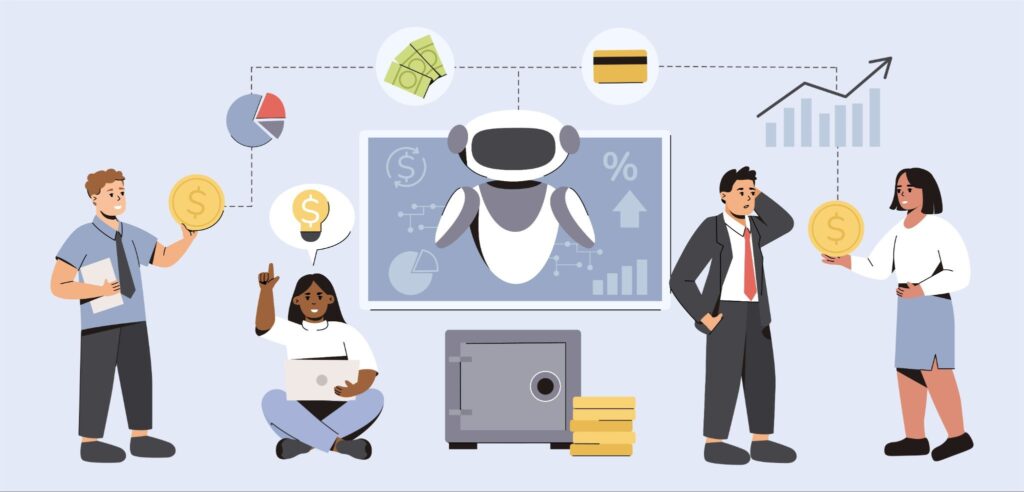
Customer acquisition cost, often called CAC, is one of the most important metrics in digital marketing. It tells you how much you are spending to acquire each new customer. When CAC rises, profitability drops. When CAC decreases, growth becomes more sustainable.
In recent years, CAC has increased across most industries. Competition is higher, ad inventory is crowded, and audiences are harder to convert. According to multiple industry reports, cost per acquisition has risen steadily due to increased demand for paid media. This has forced marketers to look for new ways to improve efficiency.
One of the most effective solutions emerging today is the use of AI ad generators. These tools help marketers produce better creatives, test faster, and optimize campaigns without increasing budgets. This article explains how to use an AI ad generator strategically to reduce customer acquisition costs.
Why is CAC increasing in modern digital advertising?
CAC is increasing because competition and complexity have grown.
More brands are competing for the same audience across platforms like Facebook, Instagram, and TikTok. As demand for ad placements increases, costs rise. At the same time, users are exposed to more ads than ever, which makes it harder to capture attention.
Another key factor is creative fatigue. Meta has indicated that ad performance can decline within 7 to 10 days in high-frequency campaigns. When ads stop performing, costs increase because conversions drop while spend continues.
To reduce CAC, marketers need to improve creative performance and maintain consistency in testing. This is where AI plays a critical role.
How does creative performance impact customer acquisition cost?
Better creatives directly lead to lower CAC.
Creative is often the first point of interaction between a brand and a potential customer. If the ad fails to capture attention or communicate value, users will not engage. This leads to lower click-through rates and higher costs per conversion.
Meta has shared that creative quality is one of the largest drivers of performance differences between ads. Strong creatives improve engagement, increase conversion rates, and reduce the cost required to acquire each customer.
Improving creative performance is one of the most effective ways to reduce CAC without changing budgets.
How can an AI ad generator increase creative output?
AI ad generators allow marketers to produce more creatives without increasing effort.
Instead of manually creating each ad variation, marketers can generate multiple versions from a single idea. This includes different hooks, messaging styles, visuals, and formats. More variations mean more opportunities to find high-performing ads.
When marketers test more creatives, they gain better insights into what works. This reduces reliance on guesswork and increases the likelihood of finding ads that convert efficiently.
Higher creative output leads to better testing, which leads to lower CAC over time.
Why does faster testing reduce acquisition costs?
Faster testing helps identify winning ads earlier.
In traditional workflows, testing can take weeks because new creatives take time to produce. During this time, underperforming ads may continue running, increasing costs. AI ad generators reduce this delay by enabling rapid testing.
When marketers can test multiple creatives quickly, they can pause low-performing ads sooner and allocate budget to high-performing ones. This improves efficiency and reduces wasted spend.
Speed is directly linked to cost control. The faster you learn, the less you spend on ineffective ads.
How can an AI ad generator improve ad relevance?
Relevance plays a major role in reducing CAC.
Ads that feel relevant to the audience are more likely to drive engagement and conversions. AI ad generators allow marketers to create variations tailored to different audience segments. This might include adjusting messaging, visuals, or value propositions.
Personalized ads tend to perform better because they align with user intent. When relevance increases, conversion rates improve, which lowers the cost per acquisition.
AI makes personalization scalable, allowing marketers to reach multiple audience segments effectively.
How does reducing creative fatigue lower CAC?
Creative fatigue increases costs by reducing performance.
When users see the same ad repeatedly, they become less likely to engage. This leads to lower click-through rates and higher cost per conversion. AI ad generators help prevent this by enabling continuous creative refresh.
Instead of running the same ad for weeks, marketers can introduce new variations regularly. This keeps campaigns fresh and maintains audience interest.
By avoiding performance drops caused by fatigue, marketers can maintain lower CAC over time.
How do AI ad generators optimize budget allocation?
AI ad generators support better budget decisions through data.
When multiple creatives are tested simultaneously, marketers can quickly identify which ads are performing best. Budget can then be shifted toward those ads, maximizing return on investment.
This approach reduces wasted spend on underperforming creatives. Instead of evenly distributing budget, marketers can focus on ads that deliver results.
Some teams use tools like ai ad generator to streamline this process. By generating multiple ad variations quickly, these tools help marketers test efficiently and allocate budget based on real performance data.
Better allocation leads to more conversions at a lower cost.
How can AI ad generators reduce production expenses?
Lower production costs contribute to lower overall CAC.
Traditional ad creation often involves designers, editors, and external agencies. Each new variation adds time and expense. AI ad generators reduce this cost by automating much of the process.
Once the system is in place, generating additional creatives requires minimal effort. This allows marketers to produce more ads without increasing production budgets.
When production costs decrease and performance improves, CAC naturally declines.
How do AI ad generators improve conversion rates?
Higher conversion rates reduce the cost of acquiring customers.
AI ad generators enable marketers to test different messaging strategies, including problem-solution angles, social proof, and benefit-focused narratives. By identifying what resonates with the audience, marketers can create ads that convert more effectively.
Research from Nielsen shows that ads aligned with audience preferences lead to stronger engagement and recall. AI helps marketers achieve this alignment faster through continuous testing.
Improved conversion rates mean fewer clicks are needed to generate a sale, which lowers CAC.
How can small teams use AI to compete with larger brands?
AI ad generators level the playing field.
Large brands often have more resources for creative production and testing. Smaller teams may struggle to keep up. AI tools allow smaller teams to produce and test creatives at scale without additional staff.
This enables them to compete more effectively in paid social campaigns. By focusing on data and testing, smaller teams can achieve strong performance without large budgets.
What mistakes should marketers avoid when using AI ad generators?
AI tools are powerful, but they require a clear strategy.
One common mistake is generating too many variations without a structured testing plan. This can lead to confusion rather than insight. Marketers should define clear goals and test specific variables.
Another mistake is ignoring brand consistency. While variation is important, ads should still align with brand identity and messaging.
AI works best when combined with strong processes and human oversight.
How can marketers get started with reducing CAC using AI?
The best approach is to start with existing campaigns.
Marketers can use an AI ad generator to create variations of ads that have already performed well. This reduces risk and increases the likelihood of finding improved versions.
From there, testing can expand to new concepts and audiences. Regular analysis and iteration help refine strategies over time.
Consistency is key. Reducing CAC is not a one-time effort but an ongoing process.
Conclusion
Reducing customer acquisition cost is one of the most important goals in digital marketing. As competition increases and platforms evolve, achieving this goal requires better creatives, faster testing, and smarter decision-making.
AI ad generators provide a practical solution. They enable marketers to produce more creatives, test efficiently, and optimize campaigns based on data. By improving creative performance, reducing waste, and lowering production costs, these tools help drive more conversions at a lower cost.
For marketers looking to scale sustainably, using AI to optimize creative workflows is no longer optional. It is becoming a necessary part of building efficient and profitable campaigns.