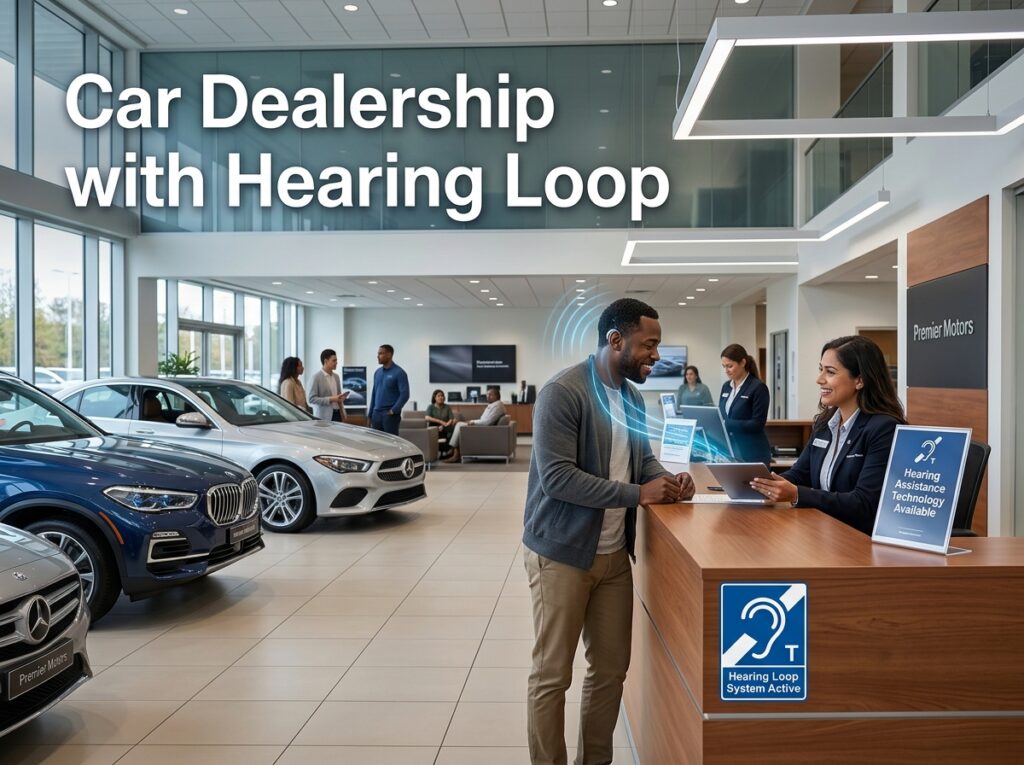
Buying a vehicle is one of the most significant purchasing decisions many people make, yet the experience can present communication challenges for individuals with hearing loss. A car dealership with hearing loop technology helps create a more inclusive environment by improving speech clarity and reducing background noise for hearing aid users. As accessibility becomes an increasingly important consideration across industries, forward-thinking automotive retailers are exploring solutions that ensure every customer can participate confidently in conversations about vehicles, financing, service appointments, and ownership options.
Hearing loop systems represent a practical accessibility technology that can significantly improve customer experiences. Their presence in automotive retail settings reflects a broader commitment to customer service, equal access, and modern business practices.
Understanding Hearing Loop Technology
A hearing loop, also known as an induction loop system, is an assistive listening technology designed to work directly with hearing aids and cochlear implants equipped with telecoils. The system transmits sound directly to compatible devices, allowing users to hear conversations more clearly without interference from surrounding noise.
In a dealership environment, hearing loops can be installed at reception desks, sales offices, finance departments, customer service counters, and waiting areas. This technology helps customers focus on conversations without struggling to distinguish speech from the ambient sounds commonly found in busy showrooms.
Why Accessibility Matters in Automotive Retail
Accessibility extends beyond physical accommodations such as ramps, elevators, and accessible parking spaces. Communication accessibility is equally important because purchasing a vehicle involves detailed discussions about pricing, warranties, financing, insurance requirements, maintenance plans, and vehicle features.
A car dealership with hearing loop systems demonstrates a commitment to serving a broader customer base. By removing communication barriers, dealerships create a more welcoming environment where customers can make informed decisions with confidence.
Benefits for Customers
Customers who use hearing aids often encounter challenges in noisy public spaces. Automotive showrooms frequently feature multiple conversations, announcements, and background sounds that can make communication difficult.
The advantages of hearing loop technology include:
- Improved speech clarity
- Reduced listening fatigue
- Better understanding of financial discussions
- Greater confidence during vehicle negotiations
- Enhanced customer satisfaction
These benefits contribute to a smoother and more comfortable purchasing experience.
Benefits for Dealerships
Accessibility investments can provide meaningful business advantages. Customers value businesses that prioritize inclusion and customer care, and positive experiences often translate into stronger customer loyalty and word-of-mouth recommendations.
Dealerships that adopt hearing loop technology may also improve communication accuracy, reduce misunderstandings, and strengthen relationships with customers. These improvements can contribute to a more efficient and customer-focused sales process.
Common Locations for Hearing Loop Installation
| Dealership Area | Purpose |
|---|---|
| Reception Desk | Initial customer interactions |
| Sales Offices | Vehicle discussions and negotiations |
| Finance Department | Contract and financing explanations |
| Service Counter | Maintenance and repair consultations |
| Waiting Areas | Public announcements and information |
Strategic placement ensures that customers benefit from improved communication throughout their dealership visit.
The Growing Focus on Inclusive Customer Experiences
Consumer expectations continue to evolve. Many customers now evaluate businesses not only on products and pricing but also on the quality of the overall experience. Accessibility has become an important component of that evaluation.
Organizations across multiple industries are investing in technologies that support inclusion. Automotive retailers are increasingly recognizing that accessible communication solutions can enhance customer engagement while reflecting modern customer service standards.
Hearing Loops Compared with Other Listening Solutions
| Solution | Key Advantage | Typical Use |
| Hearing Loop | Direct transmission to hearing aids | Public service environments |
| FM System | Portable and flexible | Educational settings |
| Infrared System | Secure signal transmission | Theaters and meeting rooms |
Each technology serves a specific purpose, but hearing loops are particularly effective in customer-facing environments where direct communication is essential.
Enhancing Vehicle Purchase Discussions
Vehicle purchases often involve detailed explanations regarding specifications, technology packages, financing terms, and ownership costs. Clear communication helps customers fully understand their options and responsibilities.
A hearing loop system supports more productive conversations between customers and dealership staff. This improved communication can increase customer confidence and reduce the likelihood of misunderstandings during the purchasing process.
Accessibility and Customer Trust
Trust is a critical factor in automotive retail. Customers are more likely to feel comfortable when they can clearly hear and understand information being shared throughout the buying journey.
By implementing communication accessibility measures, dealerships demonstrate a commitment to transparency and customer support. These efforts can strengthen customer relationships and reinforce positive brand perceptions.
Service Departments and Accessibility
Communication remains important long after a vehicle sale is completed. Service visits often involve discussions about maintenance recommendations, repair costs, scheduling, and warranty coverage.
Hearing loop technology can help ensure that customers receive accurate information during service consultations. This supports better decision-making and contributes to a positive ownership experience.
Staff Awareness and Training
Technology alone is not enough to create an accessible environment. Staff training plays a vital role in ensuring customers receive effective assistance.
Employees should understand how hearing loop systems work, where they are installed, and how to assist customers who may benefit from using them. Combining technology with knowledgeable staff creates a more inclusive dealership experience.
Accessibility as a Competitive Advantage
Businesses that invest in accessibility often distinguish themselves within competitive markets. Customers increasingly appreciate organizations that demonstrate genuine consideration for diverse needs.
A car dealership with hearing loop capabilities may appeal to individuals, families, and communities seeking businesses that prioritize inclusion and customer comfort. These investments can contribute to stronger customer satisfaction and long-term loyalty.
Future Trends in Automotive Accessibility
As vehicle technology continues advancing, customer expectations regarding accessibility are also evolving. Digital communication tools, enhanced customer service platforms, and assistive technologies are becoming more common across retail environments.
Future dealership designs may incorporate a wider range of accessibility solutions that address hearing, vision, mobility, and communication needs. Hearing loop systems are likely to remain an important component of these efforts.
Conclusion
A car dealership with hearing loop technology represents an important step toward greater accessibility and customer inclusion. By improving communication for hearing aid users, dealerships can create a more welcoming environment where customers feel informed, respected, and supported throughout the vehicle purchasing and ownership journey.
As accessibility continues to gain importance across industries, hearing loop systems offer a practical and effective solution that benefits both customers and businesses. Their adoption reflects a broader commitment to delivering exceptional customer experiences for everyone.
Frequently Asked Questions
What is a hearing loop?
A hearing loop is an assistive listening system that transmits sound directly to compatible hearing aids and cochlear implants equipped with telecoils.
Why would a car dealership install a hearing loop?
Dealerships install hearing loops to improve communication accessibility for customers with hearing loss and enhance overall customer service.
Do all hearing aids work with hearing loops?
Only hearing aids and cochlear implants equipped with telecoils can receive hearing loop signals directly.
Where are hearing loops typically installed in dealerships?
They are commonly placed at reception desks, sales offices, finance departments, service counters, and customer waiting areas.
How does hearing loop technology improve customer experiences?
It reduces background noise, improves speech clarity, minimizes listening fatigue, and helps customers better understand important information.